What If Your Dreams Are Lying to You?
The complex relationship between dreams, meaning, and neuroscience
You wake up breathless and your heart is pounding. It felt more like a vivid memory than just a dream. Emotional. Intense. Strangely important. Perhaps it was trying to tell you something about yourself… But what if it wasn't?
If you've ever found yourself lying awake, replaying thoughts you can't explain, you're not alone. We all dream and sometimes those dreams feel like they matter. For centuries, people have looked to dreams for hidden meanings. Ancient Egyptians believed they were messages from the gods. Some Indigenous North American traditions treat dreams as spiritual guides (Barrett 8). Freud built on this tradition. He argued that dreams reveal certain hidden fears, desires, and memories.
However, with neuroscience evolving many grew skeptical of Freud's theory and new explanations were introduced. This disagreement raised a question we still ask even today:
🤔 Are our dreams trying to tell us something or are they just the brain making things up?
There's still no clear answer. Theories contradict one another, offering vastly different takes on where dreams come from and what (if anything) they mean. But looking at these views isn't just about dreams. It's about how we make sense of the chaos inside our minds.
To make sense of all this, we'll look at three perspectives:
- Freud's theory of wish fulfillment
- Hobson and McCarley's brain-based model
- Windt's idea of dreams as fictional remembering
They offer very different answers. But they share one thing in common: that meaning comes not from the dream alone, but from how we choose to see it.
🧠 Freud's Take: Dreams as Wish Fulfillment
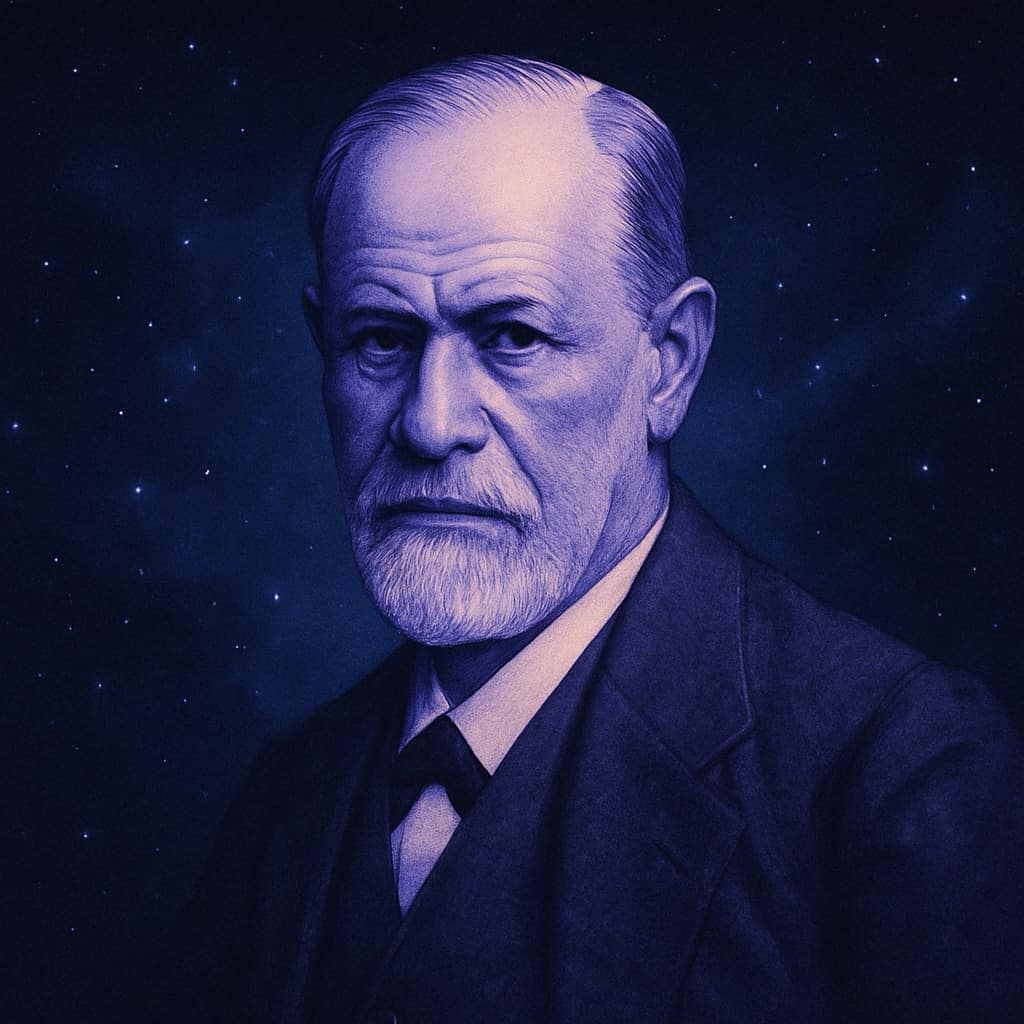 In the early 1900s, Sigmund Freud introduced a new way of thinking about dreams. He wasn't a scientist in the modern sense, but a doctor and the founder of psychoanalysis - a method based more on interpretation than experiment.
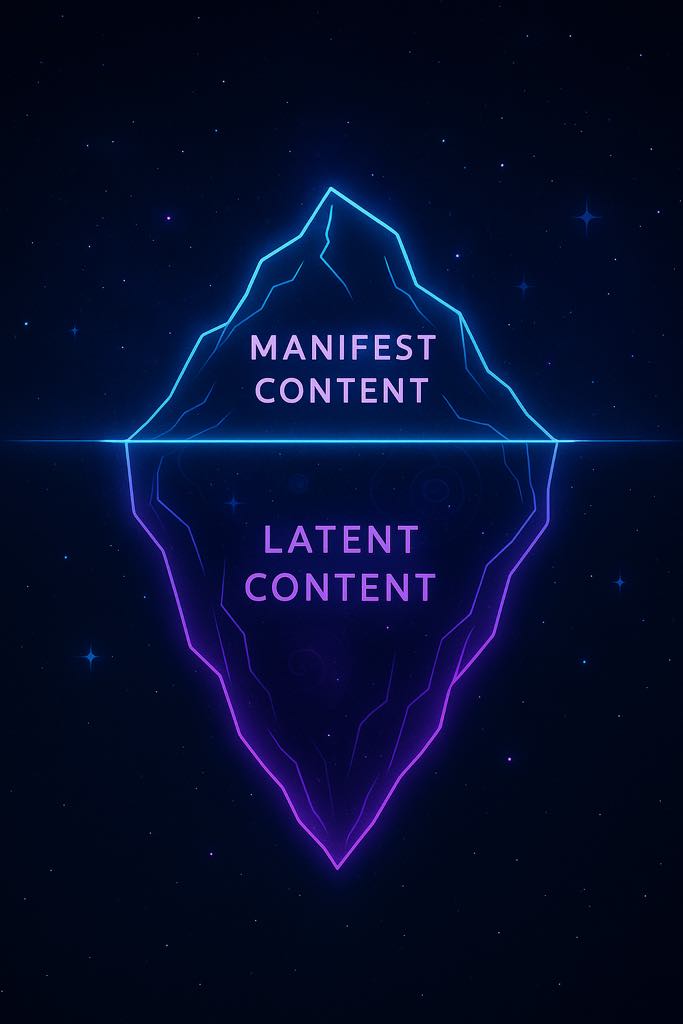
Freud believed that every dream had two layers:
- The remembered part was called the manifest content - the surface-level story we recall in the morning.
- Beneath that was the latent content - the deeper, hidden meaning connected to our unconscious thoughts.
According to him, dream analysis helps us move from the surface to what the dream is really expressing. Even today, some therapists still use dream interpretation to help people explore unprocessed feelings (Hill, Knox, and Crook-Lyon).
In The Interpretation of Dreams, he argued that dreams are a form of wish fulfillment. Even when they seem random or strange, he believed they were expressing unconscious desires (Freud 10). A child who is denied something during the day might dream about getting it at night. According to Freud, that's not a coincidence — it's the mind trying to satisfy the wish in another way.
To uncover these hidden meanings, he developed a method called psychoanalysis. It involved breaking the dream into small parts and asking the dreamer to say whatever came to mind; no matter how strange or unrelated it seemed. Freud often found surprising emotional links through this process. He even applied it to his own dreams. In one of them, he connected a dinner scene, a compliment about his eyes, and the serving of spinach to deeper feelings about guilt, love, debt, and past emotions (Freud 7). What looked like nonsense turned out to be a reflection of unresolved internal conflicts—and this is exactly what Freud believed dreams were: layered, emotional puzzles waiting to be understood.
Freud's ideas shaped how we think about the mind. The belief that dreams reveal hidden truths still influences therapy and culture. But that idea didn't go unchallenged. As neuroscience advanced, so did skepticism.
💡 Neuroscience Says... Your Dreams Might Just Be Random Sparks
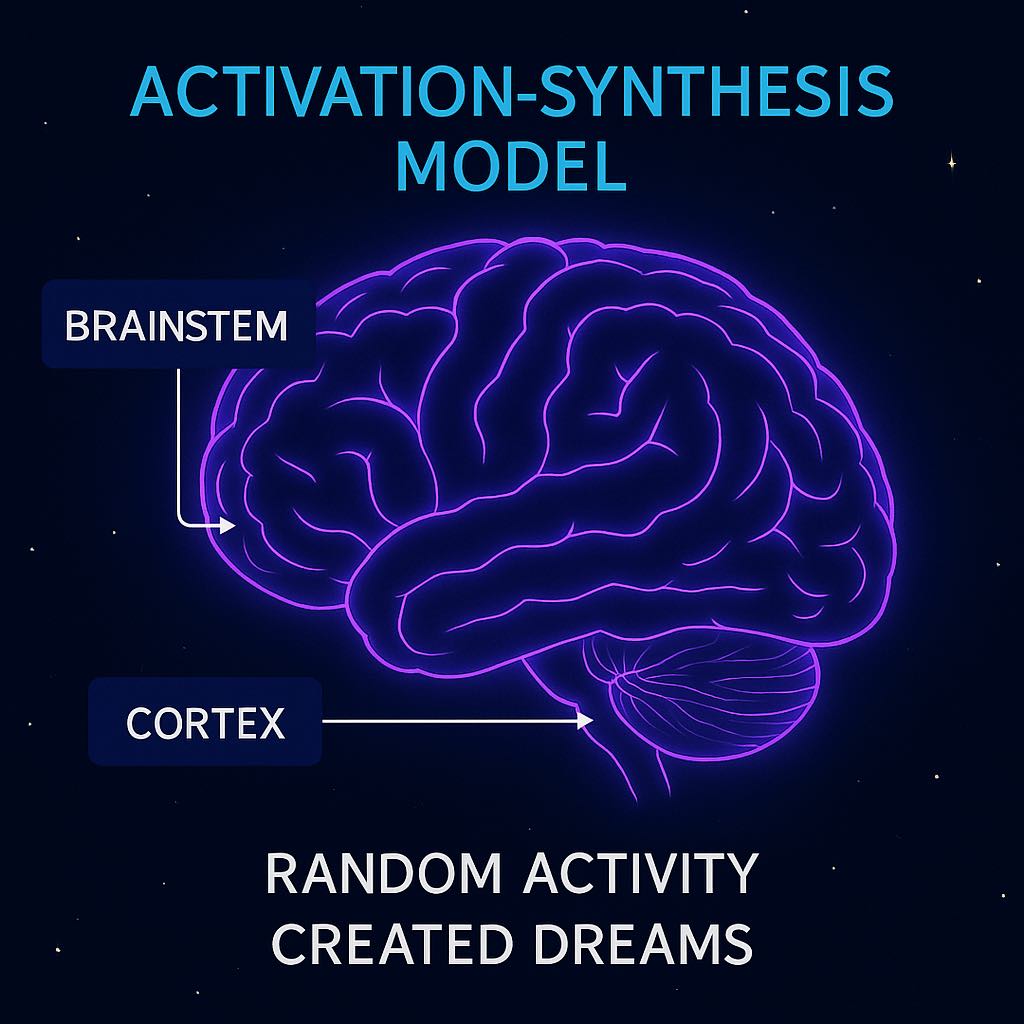
What Freud saw as deeply symbolic, neuroscientists Allan Hobson and Robert McCarley saw as something far simpler and far more random. In 1977, they introduced the activation-synthesis model, arguing that dreams happen when the brainstem sends random signals during REM sleep. The brain that is naturally inclined to find patterns, pieces the noise into something that feels like a story (Hobson and McCarley 1336).
It's a little like when we see faces in clouds or think we hear our name in a crowd that never said it. The brain fills in blanks. It always has. Dreams, in this view, aren't messages from the unconscious. They're just the mind's best attempt to organize static into a coherent scene. A 2022 neuroscience study by Siclari et al. used fMRI scans to identify spontaneous bursts of activity in the Default Mode Network — a part of the brain associated with imagination and memory. Their findings showed that even seemingly meaningful dreams can arise from these random bursts, further supporting the idea that the brain reconstructs dream scenes from scattered pieces of experience (Siclari et al. 110). That dream about falling off a building or running into someone from your past? It might not be symbolic at all—just your brain replaying emotions from the day before.
This theory directly challenges Freud. It says there's no hidden wish, no deep meaning. Just a very active brain doing what it always does: building stories. It may sound less romantic, but it forces us to rethink a prevalent assumption:
That every dream means something.
Or perhaps dreams are just what happens when the brain improvises with scraps of memory, emotion, and noise. But maybe it's not a choice between meaning and randomness.Maybe dreams are shaped by both:
- the messy signals in our brain
- the emotional residue of our day
💭 A Middle Ground: Dreams as Fictional Memories
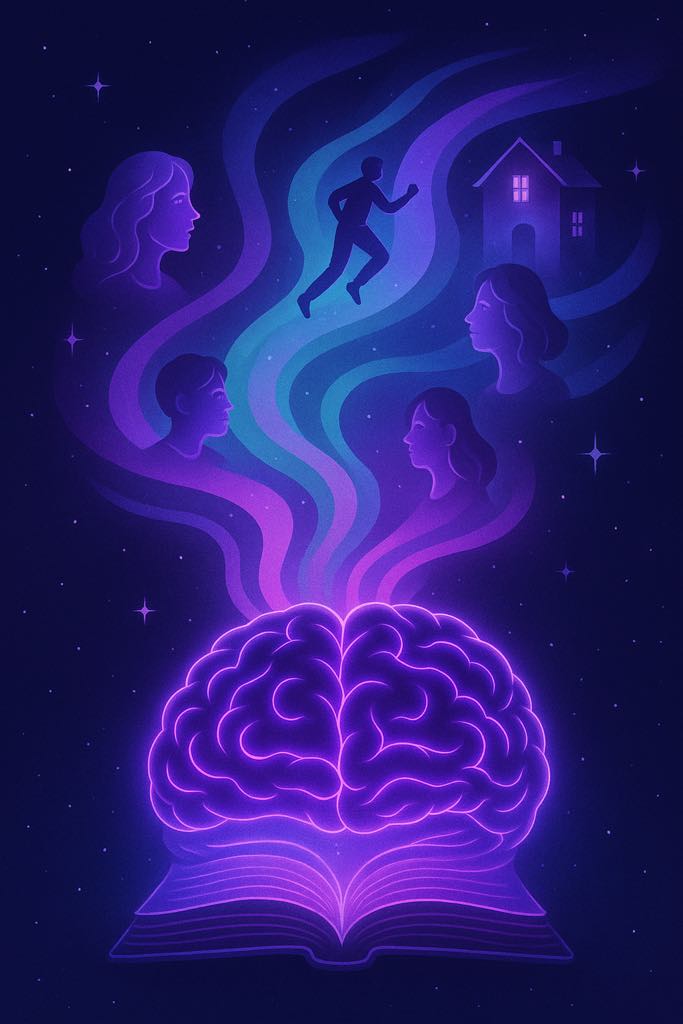 Jennifer Windt, a cognitive scientist, offers a third view. She sees dreams not as hidden messages or pure randomness but as something else entirely: fictional memories. In her view, dreams are stories our minds build while we sleep, blending imagination with bits of real experience (Windt 118-121).
Windt's idea helps explain why dreams feel meaningful, even when they're made of arbitrary brain activity. Her research suggests that dreams can have emotional weight, but that doesn't always mean they're revealing deep truths. They're more like the brain's storytelling machine working overnight.
This theory bridges Freud and Hobson and McCarley:
- dreams are constructed
- but they can still reflect what's going on in your life and your mind
They might not be hidden messages, but they can carry emotional weight.
💬 Should We Interpret Dreams At All?
So... should we try to interpret our dreams? Freud would say: yes, absolutely. Hobson and McCarley would say: no, it's pointless. Windt would probably say: it depends. Interestingly, some recent research suggests that even if dreams aren't messages, interpreting them can still be helpful. For example, a study by Edwards et al. found that reflecting on dream content helped people better understand their own thoughts and emotions (Edwards et al. 355).
Personally, I find this idea the most helpful. I've had dreams that felt completely surreal and others that seemed to echo things I was anxious about but hadn't put into words yet. Once, I dreamed I was locked out of my own house and only later realized it reflected how disconnected from myself I felt at the time. Even if that dream didn't "mean" something in a Freudian sense, it still pointed me to something important.
That's the real power of dreams: They give us space to uncover feelings we haven't faced directly or have faced already. Even if the dream started from random brain activity, the way we react to it can still tell us something valuable about ourselves.
🔮 So, What Do Dreams Really Tell Us?
Maybe that's why dreams matter.
Not because they always hold answers
But because they invite us to ask questions we might not ask when we're awake.
So the next time you wake up from a dream, wondering what it meant—maybe the question isn't what it meant at all.
Maybe the real question is:
What did it awaken in you?
🌙 Key Takeaways from the Dreamworld
Breaking down the main viewpoints:
- Freud's View: Dreams are personal messages from the unconscious, full of hidden fears, wishes, and emotions.
- Neuroscience View: Dreams are the brain making sense of random signals during sleep – more static than symbolism.
- Windt's Middle Ground: Dreams act like fictional memories, blending imagination and real experience.
- Your Response Matters: The meaning isn't just in the dream itself, but in how you react to it. Dreams can highlight your feelings or needs.
- The Bottom Line: Dreams might not show objective truth, but they can reveal something personally significant.
What do you think your dreams are telling you? Share your thoughts below!
Works Cited
- Barrett, Deirdre. The Committee of Sleep: How Artists, Scientists, and Athletes Use Dreams for Creative Problem Solving - and How You Can Too. Oneiroi Press, 2001.
- Edwards, Caroline, et al. "Dreams, Reflection, and Self-Insight." Journal of Humanistic Psychology, vol. 53, no. 4, 2013, pp. 347-362.
- Freud, Sigmund. The Interpretation of Dreams. Macmillan, 1900.
- Hill, Clara E., Joanne Knox, and Rachel E. Crook-Lyon. "Dream Work in Therapy: Facilitating Exploration, Insight, and Action." American Journal of Psychotherapy, vol. 67, no. 3, 2013, pp. 211-234.
- Hobson, J. Allan, and Robert W. McCarley. "The Brain as a Dream-State Generator: An Activation-Synthesis Hypothesis of the Dream Process." American Journal of Psychiatry, vol. 134, no. 12, 1977, pp. 1335-1348.
- Siclari, Francesca, et al. "The Neural Dynamics of Dreaming." Nature Neuroscience, vol. 25, 2022, pp. 106-114.
- Windt, Jennifer M. Dreaming: A Conceptual Framework for Philosophy of Mind and Empirical Research. MIT Press, 2015.
- TED-Ed. "Why Do We Dream?" YouTube, uploaded by TED-Ed, 8 Oct. 2013, www.youtube.com/watch?v=2W85Dwxx218.
- OpenAI. "AI-generated Illustrations Created with DALL·E 3." ChatGPT, OpenAI, 2025.
Share Your Thoughts
I'd love to hear your perspective on dreams and meaning!